

Roofing language can sound technical, but most terms describe familiar parts of a roof, common maintenance issues, or measurements used during repairs. Understanding the vocabulary makes it easier to read inspection notes, compare recommendations, and recognize warning signs before a small problem becomes interior water damage.
What are the main parts of a residential roof?
A roof is a system of layers and components, not just the visible shingles. Each part has a specific function.
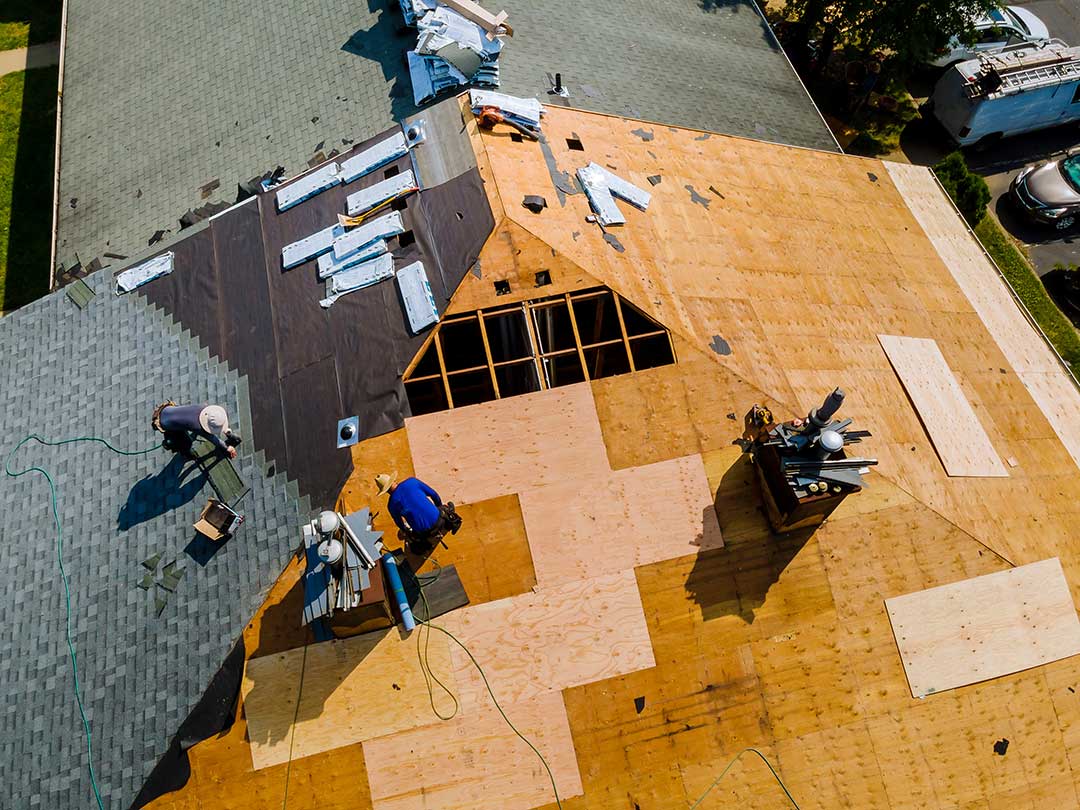
- Roof deck: The structural surface beneath the roofing materials. It is commonly made from plywood or oriented strand board and provides the base for the underlayment and shingles.
- Rafters and trusses: Framing members that support the roof deck. Rafters are individual sloped boards, while trusses are engineered assemblies made from connected pieces.
- Eaves: The lower edges of a sloped roof that extend beyond the exterior walls.
- Rake: The sloped edge running from the eave toward the ridge.
- Ridge: The highest horizontal line where two roof slopes meet.
- Valley: The inside angle where two roof sections meet. Valleys collect and direct a large amount of water, so they require careful installation and inspection.
- Fascia: The vertical trim board along the roof edge, often behind the gutters.
- Soffit: The underside of the eaves. Vented soffits can allow outside air to enter the attic.
- Flashing: Thin, water-resistant material installed around roof penetrations, walls, chimneys, valleys, and other transition points.
Roof edges and intersections deserve particular attention in a climate with snow, freezing temperatures, wind, and repeated thawing. Water often enters at these transitions rather than through the middle of an otherwise intact shingle field.
What is the difference between shingles, underlayment, and the roof deck?
Shingles shed most rainfall, underlayment adds a secondary layer of protection, and the roof deck provides the structural base.
Shingles are the exposed roofing units arranged in overlapping courses. Asphalt shingles are common on many homes because they are relatively light and available in several profiles and colors. Individual shingles may crack, curl, blister, loosen, or lose granules over time.
Underlayment is a water-resistant sheet installed over the roof deck and beneath the shingles. It can help protect the deck if wind-driven rain reaches beneath the shingle edges. Common terms include synthetic underlayment and asphalt-saturated felt.
Ice and water protection is a self-adhering membrane used in vulnerable areas such as eaves, valleys, and around penetrations. It is intended to reduce leakage from ice dams and wind-driven water. Its use and placement may depend on applicable building requirements and the roof design.
Roof deck refers to the boards or panels attached to the framing. If the deck is soft, swollen, delaminated, or visibly deteriorated, replacing only the surface shingles may not address the underlying problem.
What does roof pitch mean?
Roof pitch describes how steeply a roof rises compared with its horizontal span. A roof with a 6:12 pitch rises 6 inches for every 12 inches of horizontal distance.
Pitch affects:
- How quickly water and melting snow drain
- Which roofing materials are suitable
- How much wind exposure the roof experiences
- How difficult and hazardous the surface is to walk on
- The amount of attic and roof volume inside the structure
The terms slope and pitch are sometimes used interchangeably in everyday conversation, although roofing professionals may distinguish between the angle of a roof and its rise-over-run measurement. A low-slope roof is not necessarily flat; it simply has less incline and may require specialized installation methods.
What are flashing and roof penetrations?
Flashing is installed wherever roofing materials meet another surface or where something passes through the roof. These locations are called penetrations or transitions.
Typical examples include:
- Plumbing vent pipes
- Chimneys
- Skylights
- Dormers
- Sidewalls
- Valleys
- Roof-to-wall intersections
- Attic vents
Flashing may be made from metal, membrane materials, or combinations of both. It must be shaped and layered so water is directed back onto the roof surface rather than behind the roofing materials.
A common misconception is that a roof leak always appears directly below its source. Water can travel along the underside of the roof deck, framing, insulation, or interior finishes before becoming visible. A ceiling stain may therefore be several feet away from the actual entry point.
What are roof ventilation and attic ventilation?
Roof ventilation helps manage heat and moisture in the attic. A balanced system generally allows air to enter through lower intake vents, often at the soffits, and leave through higher exhaust vents near the ridge or another suitable location.
Terms homeowners may encounter include:
- Soffit vent: An intake vent located under the eaves.
- Ridge vent: A continuous exhaust vent installed along the roof ridge.
- Gable vent: A vent placed in the triangular wall area beneath a roof peak.
- Turbine vent: A wind-driven exhaust vent.
- Baffle: A channel that helps preserve airflow between insulation and the underside of the roof deck.
Ventilation is not the same as air sealing or insulation. Adequate insulation can reduce heat loss, while ventilation helps move air through the attic. Both systems must work properly. Blocked soffit vents, compressed insulation, or poorly placed exhaust vents can limit airflow.
In winter, warm attic air can contribute to uneven roof temperatures. That may increase the risk of snow melting on warmer roof sections and refreezing at colder eaves, creating an ice dam. Proper attic insulation, air sealing, and ventilation can help reduce this risk, although they cannot eliminate every snow-related problem.
What is an ice dam?
An ice dam is a ridge of ice that forms along a roof edge and prevents melting snow from draining normally. Water may back up beneath shingles or behind flashing and enter the building.
Ice dams are more likely when:
- Snow remains on the roof for extended periods
- Heat escapes into the attic
- The roof has uneven temperatures
- Snow melts during daytime warming and refreezes at the eaves
Homeowners should avoid climbing onto an icy roof or removing ice with sharp tools. Those actions can damage shingles and create a serious fall hazard. Heavy snow loads, visible ceiling leaks, or large ice buildup may require prompt evaluation because the safest response depends on the roof design and conditions.
What do roof age, service life, and remaining life mean?
Roof age is the number of years since installation. Service life is the expected period during which the roofing system can perform adequately under normal conditions. Remaining life is an estimate of how much useful performance may be left.
These terms are not exact expiration dates. A roof’s condition depends on installation quality, ventilation, material exposure, storm damage, maintenance, attic moisture, and the number of previous repairs.
A roof can be older but functioning well, while a newer roof may have problems caused by poor ventilation, impact damage, installation errors, or flashing failures. Visible age alone does not establish the roof’s condition.
What do granule loss, blistering, curling, and buckling indicate?
These terms describe common shingle conditions:
- Granule loss: Loose mineral granules collect in gutters or appear in downspout discharge. Some loss is normal after installation, but widespread loss can expose the asphalt coating.
- Blistering: Raised areas on shingles that may be associated with moisture or manufacturing conditions. Blisters should not automatically be confused with hail impacts.
- Curling: Shingle edges or corners turn upward or downward.
- Buckling: Shingles appear wavy or distorted, sometimes because of deck movement, installation issues, or moisture.
- Missing shingles: Entire shingles or sections have been blown away, leaving the underlayment or deck more exposed.
- Algae staining: Dark streaks or discoloration caused by biological growth. Staining is usually different from structural deterioration, although persistent moisture still deserves attention.
A single damaged shingle and widespread surface deterioration do not carry the same significance. Context matters, including the roof’s age, the location of the damage, and whether water has reached the underlying layers.
What is a roof inspection supposed to identify?
A roof inspection evaluates visible roofing components and related conditions. It may include the shingles, flashing, valleys, penetrations, gutters, roof edges, attic areas, insulation, ventilation, and signs of interior moisture.
An inspection is not always the same as a leak investigation. A general inspection may document visible conditions, while a leak investigation focuses on tracing water entry. Nor is an inspection a guarantee that hidden damage does not exist. Roofing materials, concealed framing, and areas covered by snow or ice may not be fully observable.
For homeowners, the most useful inspection language identifies the location, severity, likely cause, and recommended urgency of each condition. Phrases such as “monitor,” “repair soon,” or “immediate attention” should be tied to specific observations rather than used as vague labels.
Knowing these terms helps residents interpret roof conditions more accurately, especially after heavy wind, a major snow event, or a freeze-thaw cycle. It also makes it easier to distinguish ordinary aging from conditions that may allow water or cold air to enter the home.
